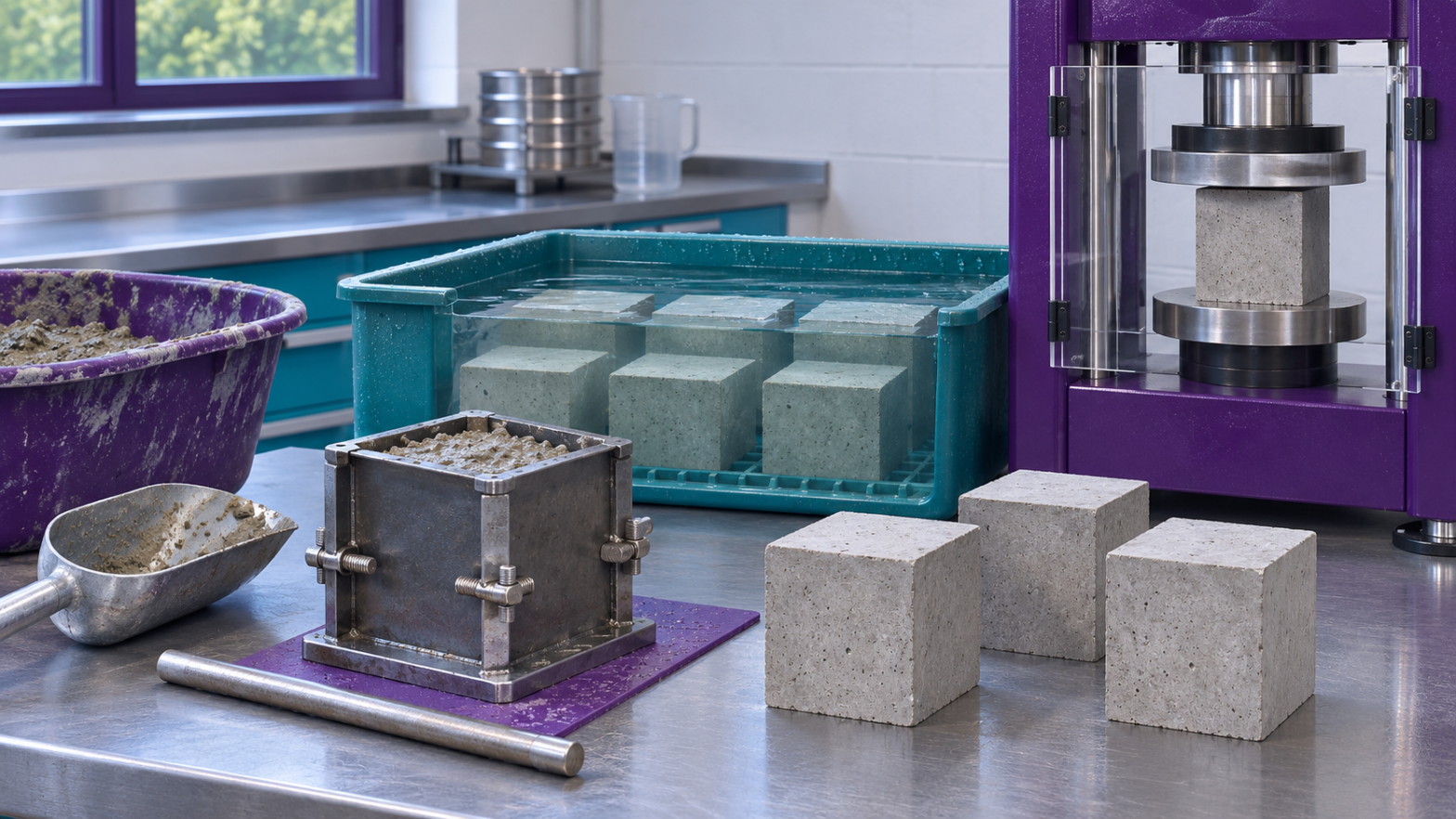
A low concrete cube result matters, but it does not automatically prove that the supplied concrete was defective. Before changing a mix or starting a dispute, the sample, specimen and test process need to be examined.
Start with the sample
The cube can only represent the concrete actually sampled. Samples taken for convenience, left standing or not properly remixed may not represent the load. Sampling should therefore be part of the investigation, not a footnote. Establish where the sample came from, when it was taken, how it was handled and whether the relevant procedure was followed.
Cube making is a controlled process
The mould should be clean, correctly assembled, dimensionally sound and placed on a suitable level surface. Release agent must be used appropriately and the concrete compacted consistently.
Poor compaction leaves additional voids in the specimen and can reduce measured strength. Moving a freshly filled mould, allowing it to leak or using inconsistent compaction can also create a cube that is not representative of the concrete placed in the structure.
The first hours are important
A 100 mm cube contains only about one litre of concrete. During its first day it should be treated as a laboratory specimen, even when it is made on site. Leaving moulds in a van, beside a heater, outdoors or in an uncontrolled cabin can affect early hydration. Conditions before demoulding, transport and curing history should all be considered.
Testing still requires care
The condition of the cube, its dimensions, orientation and placement in the compression machine can influence the result. Equipment must be maintained and calibrated, but a valid certificate cannot correct a poorly made specimen. An unusual fracture pattern, damaged face or dimensional problem may provide evidence that should not be lost when only the final number is reported.
Investigate the complete chain
- Was the sample representative?
- Were the moulds suitable and correctly assembled?
- Was the concrete remixed and compacted properly?
- Were initial storage and curing conditions controlled?
- Were transport and laboratory testing satisfactory?
- Do production records, other specimens and in-situ performance support the same conclusion?
The mix design may be responsible, but it is only one part of the evidence. Changing it before the complete process has been reviewed can conceal the real problem and add unnecessary cement, cost or embodied carbon.
B-TEK provides independent support with low-strength investigations, production records, conformity, sampling and testing practice. If a cube result does not look right, we can help establish what the evidence actually shows.